

Share via

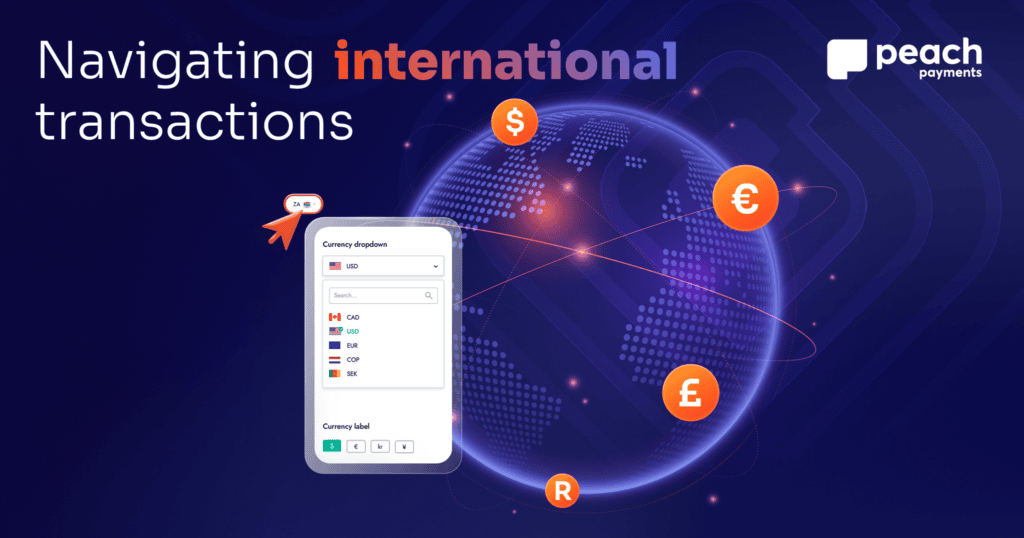
Ever wonder how the price of that souvenir changes when you pay with your card abroad? Or why some online stores show prices in your currency while others don’t? It’s all down to Dynamic Currency Conversion (DCC) and Multi-Currency Pricing (MCP), and understanding the difference can save you money and headaches. These are crucial considerations in the increasingly global economy, with cross-border transactions projected to reach a staggering $290 trillion by 2030.
Decoding Dynamic Currency Conversion (DCC)
Imagine you’re on vacation and find the perfect gift. You go to pay, and the Point of Sale machine asks if you want to pay in your home currency. That’s DCC in action. It offers the convenience of seeing the price in your familiar currency right then and there. However, this convenience comes at a cost.
- How it works: When you use a foreign card, the system instantly calculates the exchange rate and adds a markup, displaying the final price in your home currency.
- The catch: The markup applied to the exchange rate is where the merchant makes a profit. These markups can be higher than standard exchange rates, and you only see the final price at checkout, not while browsing. This can lead to unexpected costs and potentially sour your shopping experience.
Multi-Currency Pricing (MCP): A Different Approach
MCP offers a more transparent pricing model. Imagine browsing an online store where prices are displayed in your local currency throughout your entire shopping journey. That’s MCP.
- How it works: The store maintains fixed price lists in multiple currencies. You pay in your local currency, and the business receives payment in their chosen currency.
- The advantage: Consistent pricing in your local currency throughout the shopping experience eliminates surprises at checkout and fosters trust.
DCC vs. MCP: A Comparative Look
| Feature | DCC | MCP |
| Pricing | Price shown in home currency at checkout | Price shown in local currency throughout |
| Exchange Rate | Markup applied, potentially less favorable | Typically uses prevailing market rates |
| Fees | Includes a markup/conversion fee | Generally lower transaction fees |
| Transparency | Less transparent, markup not always clear | More transparent, prices clearly displayed |
| Customer Impact | Potential for surprise fees, dissatisfaction | Increased price transparency, customer trust |
| Business Impact | Revenue from markups, less exchange rate risk | More exchange rate risk, requires price management |
Addressing the Challenges
Both DCC and MCP present challenges for business. Here’s how you can address them:
- DCC Best Practices: Invest in modern payment systems that offer transparent fee disclosures and real-time exchange rate information. Train staff to clearly explain DCC to customers.
- MCP Best Practices: Implement automated tools for updating prices based on fluctuating exchange rates. Consult with financial experts to navigate international tax regulations. Optimize websites to dynamically display prices based on the user’s location.
Financial Implications for Businesses
- Exchange Rate Markups: DCC incorporates markups, making it potentially more expensive for customers. MCP generally uses prevailing market rates.
- Transaction Fees: DCC involves additional fees shared between the merchant and payment provider. MCP typically has lower fees, although these can vary.
- Revenue Generation: DCC allows merchants to earn a portion of the conversion fee. MCP does not directly generate revenue from currency conversion.
- Exchange Rate Risk: DCC locks in the exchange rate at the time of purchase, minimizing risk for the merchant. With MCP, businesses must manage the risk associated with fluctuating exchange rates.
Which Approach is Right?
The optimal choice between DCC and MCP depends on the specific business context:
- DCC: Often preferred by businesses in tourist-heavy areas due to its immediate revenue generation and ease of implementation for in-person transactions.
- MCP: Generally more suitable for e-commerce platforms aiming for broader international reach and price transparency, fostering customer trust and potentially higher conversion rates. It is also better for businesses that want to provide a consistent and predictable shopping experience for their international customers.
How Peach Payments helps
Peach Payments offers MCP for our South African and Mauritian merchants. In South Africa, we can help you register for an ABSA multi-currency account and accept payments in multiple currencies with ease and get free daily settlements in Rands. If you have a Mauritian business, we can register you for an MCP account with the Mauritius Commercial Bank and even settle you in a foreign currency like U.S. Dollars. Dynamic Currency Conversion (DCC) is on our roadmap—stay tuned for updates!
Conclusion
Choosing between DCC and MCP is a crucial decision for businesses operating in the global marketplace. Careful consideration of the business model, target audience, and operational capabilities is essential. Both approaches can enhance the customer experience when implemented thoughtfully. By understanding the nuances of each method, businesses can make informed decisions that benefit both themselves and their customers.
Scale with Peach
Learn how we help scale some of Africa's most exciting businesses
Business tips, case studies, interviews with online store owners and business trends…

2026 Online Retail Report just launched. Here's what you need to know

Meet Tegan: Turning Risk into a Growth Enabler

Empowering Change: Reshaping Payments

Meet Akshay: Solving complexity on the front line

‘Prove you're human’ is the wrong security question in agentic commerce

Solving complexity: Part 2 - The Strategic Pivot
Solving complexity: Part 1 - The Irony of Progress

Retail & E-Commerce payments—The Conversion Engine

Travel & Hospitality Payments - Fly me to the boom

Five payment pain points hotels face and how to solve them

Giving your customers the ultimate checkout shortcut with Embedded Express
PayJustNow on Peach Payments’ POS device improves in-store payment experience
Peach Payments brings Apple Pay to merchants

From Check-in to Check-out

How Multiple Payment Options Improve Online Travel Sales

The New Standard for Payouts in South Africa
Peach Payments and Yoyo add bank card-linked loyalty to Digit Pro POS device
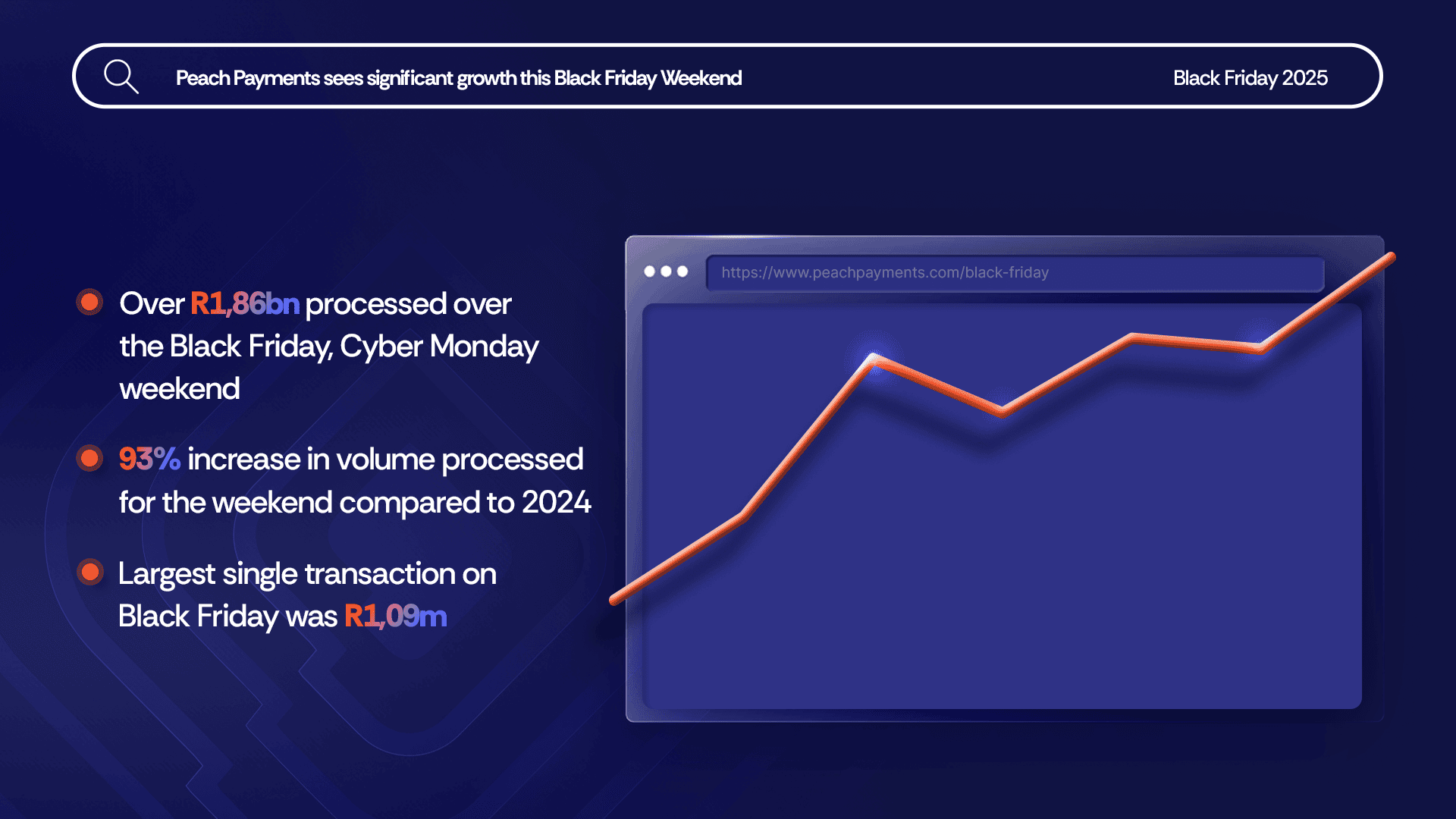
Black Friday up 93% over 2024, R1,86bn processed

Bringing Our New Peach Values to Life

Samsonite in-store payment methods
How global and regional companies can use the Mauritius IFC to centralise online payments and treasury functions

# PeachFriday Merchant Deals 2025
A merchant’s guide to chargebacks

Four Black Friday payment realities for merchants
What are Direct Merchant Accounts (ISO) versus Aggregation Accounts?

What Is 3RI? Everthing you need to know about Requestor-Initiated Authentication
Highlights from the 2025 World Wide Worx Online Retail Report
What is Interchange? Everything you need to know about interchange fees
Cadana Pay x Peach Payments: Unlocking seamless global Payouts
Peach Payments announces real-time clearance Payouts
Peach Payments x MoneyBadger partnership goes live