


Share via


What the Online Retail in South Africa 2026 report tells us about payments, and what merchants should do about it
South African online retail will hit roughly R159-billion this year. That is about 22.5% growth on 2025, and the first full calendar year where online accounts for around 10% of national retail turnover.
Put that in perspective. The market will add about R29-billion in a single year. That is almost the size of the entire South African online retail market in 2020, which came in at R30.2-billion. Meanwhile the broader retail sector is growing at about 4% in nominal terms.
The profitability picture has changed too. Takealot Group posted its first full-year trading profit fifteen years after launch. Pick n Pay’s online business was profitable for a second year running, with turnover up 32.7%. Checkers Sixty60 grew 34.5% to R25.5-billion. TFG Africa’s online sales grew 49.2% and now make up 8.2% of divisional sales.
So the “will South Africans shop online” question is settled. Which means the interesting question has moved somewhere else, and it has landed squarely in payments.
The number that should worry all of us
79.1% of South African adults have internet access. Only 34.2% shop online.
And that second number went down, from 36.6% the year before.
This is not a demand problem. Existing online shoppers are simply buying more, which is why turnover is up a third while the shopper base narrowed. But it tells you the growth is coming from deepening an already-converted base rather than bringing new people in.
The gap is starkest at the bottom of the income curve. Among LSM 3–6 consumers, 70.4% have internet access and 23.9% shop online. Among LSM 7–8, it is 84.2% and 36%. More than 60% of adults in households earning R40,000-plus shop online, and penetration hits 75.4% in the highest socio-economic segment. Women have higher internet access than men (80.5% vs 77.6%) but lower online shopping penetration (31.7% vs 36.9%).
South Africa does not have a connectivity shortage. It has a conversion gap. And a meaningful slice of that gap is checkout design.
Payments stopped being the bottleneck. That is the point.
Here is the thing that has genuinely shifted, and it is the finding we keep coming back to internally.
Retailer satisfaction with payment providers sits at 92%. During the 2025 Black Friday weekend, PayInc cleared an average of 934 transactions a minute. Peach Payments alone processed more than R1.86-billion across Black Friday and Cyber Monday.
The rails work. The infrastructure held. The constraint has moved from can this payment complete to will this customer choose to complete it.
Practically, it means the customer paying with prepaid data on an entry-level Android is the growth market, not an edge case. 57.9% of online shoppers use a smartphone, more than double the 26% on laptops, and browsers still beat apps in 42 of the 48 categories measured. So pages have to load on a constrained connection. Payment options have to be ones the customer already recognises. And the checkout has to recover cleanly when signal drops halfway through a 3DS redirect, because it will.
This is why we built Embedded Express, letting customers pay with a digital wallet straight from the product page before they ever reach a checkout. Fewer steps, less to abandon.
The payment mix has fragmented, and adding every logo is the wrong answer
Five years ago you could describe the South African checkout in one word: card. Not anymore.
Card is still the base layer. But pay-by-bank and instant EFT now carry serious volume, with 40.8% of retailers offering Instant EFT or PayShap. Capitec Pay on its own accounts for 40% of payment value across some processors. Digital wallets grew more than 34% year on year. And Buy Now Pay Later has found its natural range at R800 to R8,000, where it demonstrably lifts conversion and basket size. Below about R300 it adds nothing at all.
The smart move is orchestration. Route each transaction to the method most likely to complete it for that customer, on that device, at that basket size. Fewer visible choices, better matched.
It is also worth watching the Reserve Bank’s Payments Ecosystem Modernisation programme. The activity-based framework being built there will let retailers and fintechs participate more directly in payment activity. If you run a large loyalty ecosystem, that is a strategic question for this year’s roadmap, not a 2029 one.
Trust is the slower curve
One finding should keep everyone in this industry honest.
Comfort with the mechanics of online shopping is improving. Mobile-app comfort rose from 14.5% to 18.1%. But only 20.7% of online shoppers strongly agree that entering their personal details online is safe, and 17.6% strongly agree that online purchases are secure. Concern about financial information being stolen has barely moved.
Tokenisation is one of the quiet wins of the last few years: the customer’s actual card details never touch the merchant’s systems, and the customer gets a one-tap repeat purchase out of it.
Two things coming faster than most roadmaps assume
Subscriptions have become the battleground. Amazon Prime launched locally in June at R59 a month. Shoprite’s Xtra Savings Plus offers unlimited free delivery for R99. TakealotMORE passed 25% of group GMV within two years. Every one of those puts recurring authorisation, stored credentials and failed-renewal recovery at the centre of retail economics. If your involuntary churn from expired cards is invisible to you right now, that is revenue leaving quietly.
AI has arrived at the interface. ShopriteX put Pixie inside Sixty60 in April. Pick n Pay launched Penny on asap! in July, letting customers build a basket by voice note or photo. Globally, AI-referred retail traffic is up 805% year on year. Right now these assistants help build the basket. Fairly soon customers will expect them to finish the job, and no South African retailer yet lets an external AI agent complete a purchase through an API.
When that changes, the payment layer will need to authorise a transaction that no human is watching. Safely, reversibly, with clear consent and a clean audit trail. The merchants thinking about that now will move considerably faster than the ones who wait.
What we’d actually do with this report
If you run an online business in South Africa, three things:
- Audit your checkout on a cheap phone on a bad connection. Not your iPhone on office wifi. Time it. Count the steps. Find out where shipping cost first appears.
- Consider which payment methods suit your target market and start routing them. Match method to customer, device and basket size, and measure completion rate per combination rather than per method.
- Look at your collection economics. More than 55% of Mr Price online orders are collected in store, and Shoprite has pushed Sixty60 into selected Shoprite stores. For the next cohort of shoppers, a delivery fee on a small basket is often the whole objection.
The through-line across all our 11+ markets is the same. Growth comes from the customers you are currently losing at the last screen, not the ones you are already converting.
There are 65% of connected South African adults who don’t shop online yet. That is the market.
Download the full report here
.<\/p>
Scale with Peach
Learn how we help scale some of Africa's most exciting businesses
Business tips, case studies, interviews with online store owners and business trends…
2026 Online Retail Report just launched. Here's what you need to know

Meet Tegan: Turning Risk into a Growth Enabler

Empowering Change: Reshaping Payments

Meet Akshay: Solving complexity on the front line

‘Prove you're human’ is the wrong security question in agentic commerce

Solving complexity: Part 2 - The Strategic Pivot

Solving complexity: Part 1 - The Irony of Progress

Retail & E-Commerce payments—The Conversion Engine

Travel & Hospitality Payments - Fly me to the boom

Five payment pain points hotels face and how to solve them

Giving your customers the ultimate checkout shortcut with Embedded Express

PayJustNow on Peach Payments’ POS device improves in-store payment experience
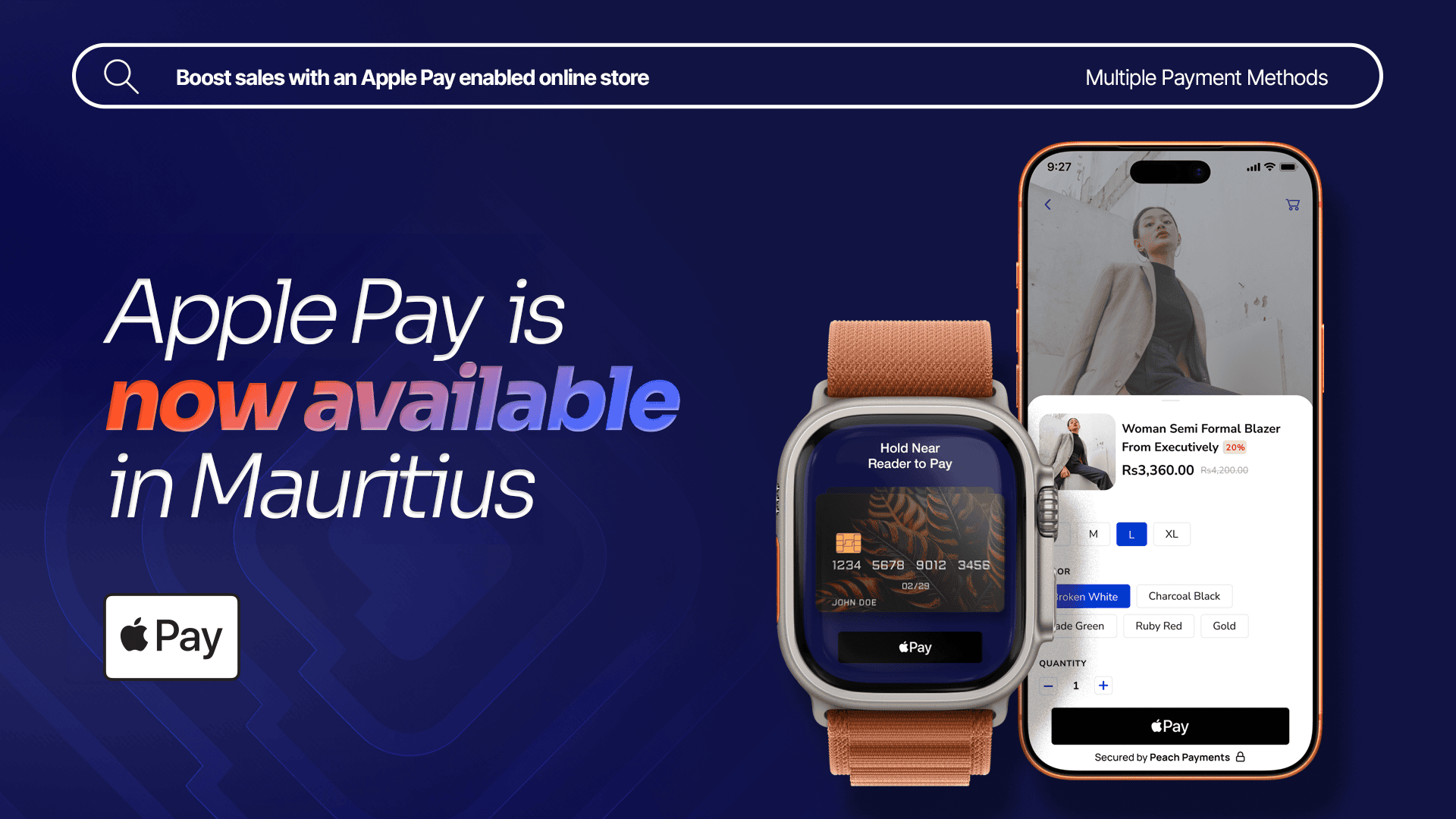
Peach Payments brings Apple Pay to merchants

From Check-in to Check-out

How Multiple Payment Options Improve Online Travel Sales

The New Standard for Payouts in South Africa
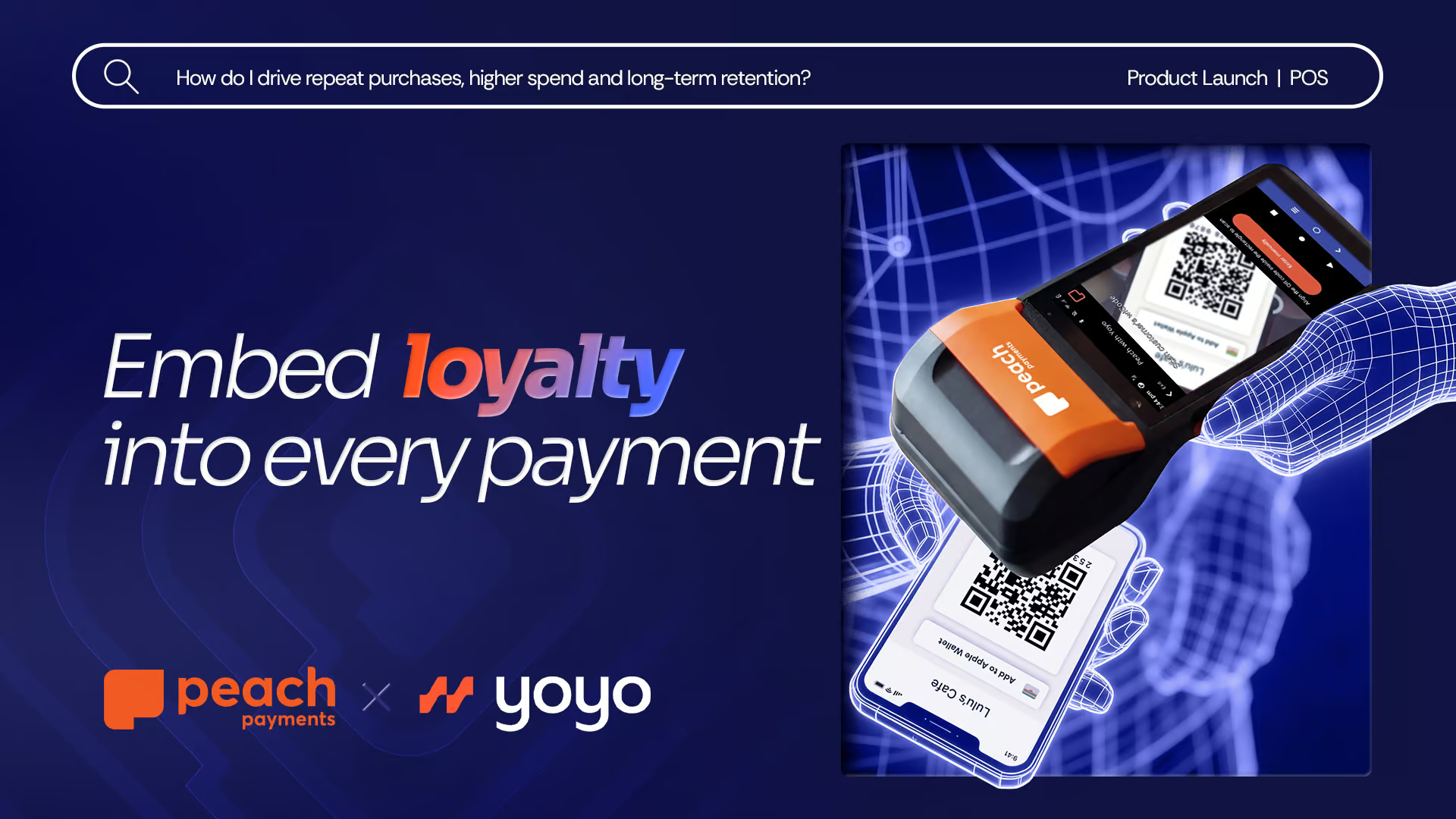
Peach Payments and Yoyo add bank card-linked loyalty to Digit Pro POS device
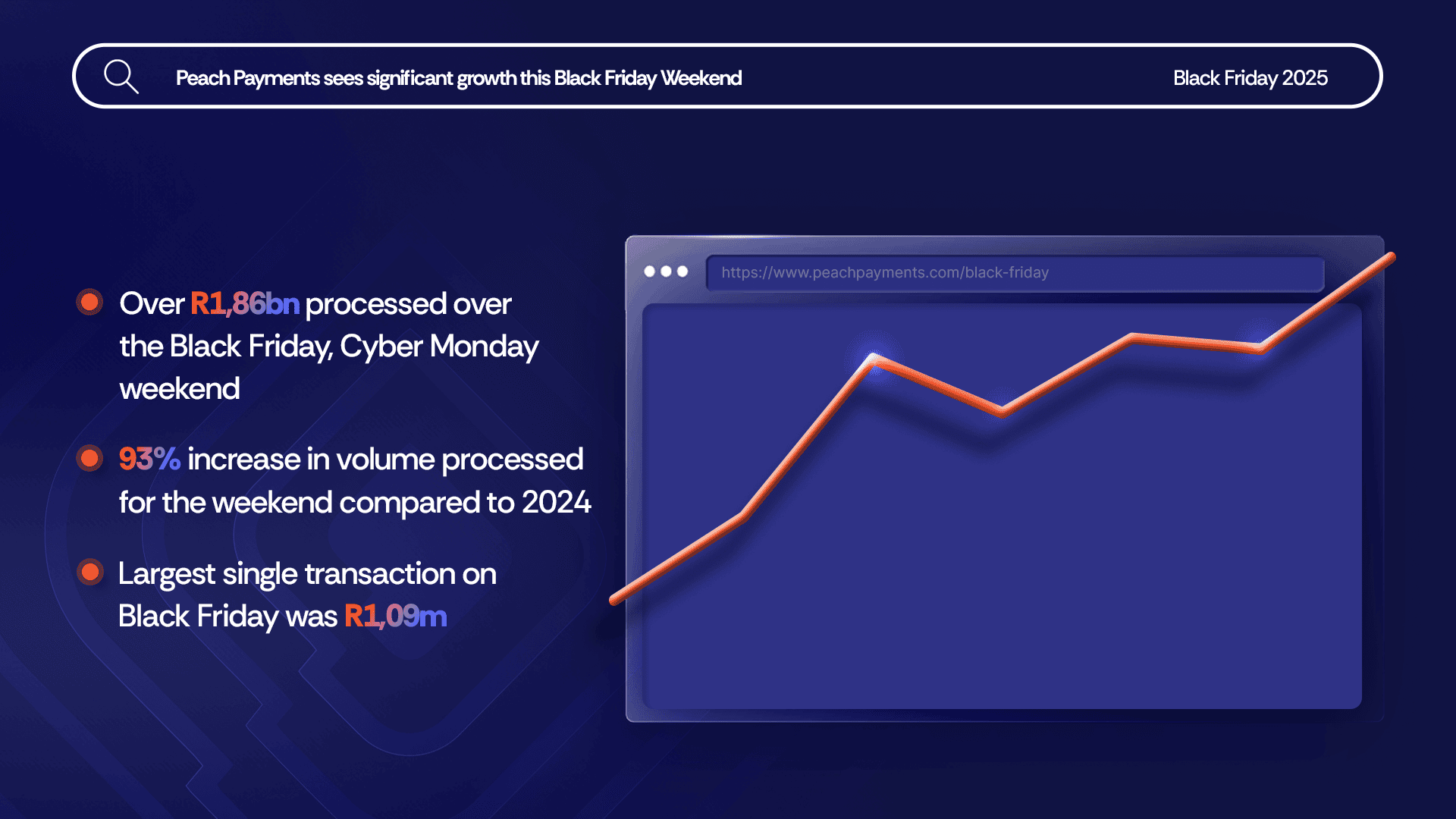
Black Friday up 93% over 2024, R1,86bn processed

Bringing Our New Peach Values to Life

Samsonite in-store payment methods
How global and regional companies can use the Mauritius IFC to centralise online payments and treasury functions

# PeachFriday Merchant Deals 2025
A merchant’s guide to chargebacks

Four Black Friday payment realities for merchants
What are Direct Merchant Accounts (ISO) versus Aggregation Accounts?

What Is 3RI? Everthing you need to know about Requestor-Initiated Authentication

Highlights from the 2025 World Wide Worx Online Retail Report
What is Interchange? Everything you need to know about interchange fees
Cadana Pay x Peach Payments: Unlocking seamless global Payouts
Peach Payments announces real-time clearance Payouts
Peach Payments x MoneyBadger partnership goes live