

Share via


Disconnects between marketing and development teams can leave customer experience problems unresolved, even when both sides are trying to address the same problem.
“The two teams don’t always speak the same language,” says Peach Payments Marketing Director Yudhvir Ranchod, “Marketers need to translate the request into something a technical team can understand, investigate and act on.”
“Marketing and engineering are both trying to create clarity, but they measure it in very different ways,” he says. “Marketers tell stories that resonate emotionally. Engineers need specificity, a claim they can test, a problem they can scope, and a result they can measure. Neither approach is wrong, but problems arise when we each assume we’re being understood by the other.”
Take a seemingly straightforward request: “Can we make the checkout flow better?”
To a marketer, that means customers are complaining, conversion may be suffering, and the checkout experience needs attention. To an engineer, ‘flow better’ means almost nothing. There is no definition of what’s broken, no measure of success, no sense of whether it means changing a few fields or rebuilding the checkout.
This concern is not trivial. According to the Online Retail in South Africa report, by World Wide Worx, Mastercard, Ask Africa and Peach Payments, 37.3% of retailers cited a long or complicated checkout process as a leading cause of cart abandonment. This is up from 16.9% the previous year.
“So it goes onto the backlog,” says Ranchod, “because the request can’t compete with work that has a defined scope, an owner and a measurable outcome.”
Why adjectives lose
There’s another problem. The average marketing request to engineers doesn’t show what happens if nothing is done. Without a visible cost of inaction, it is competing for limited technical resources against work backed by measurable impact.
“Every other item in the queue has a number next to it. This one has an adjective. Adjectives lose,” says Ranchod.
Marketing teams balance engagement, conversion, customer satisfaction, retention and revenue. Engineering teams have their own priorities: uptime, security, compliance, incident risk and maintainability. They also consider a question marketers rarely ask: can this be switched off quickly if it goes wrong? The harder a change is to reverse, the greater the risk engineering has to weigh.
“A request isn’t necessarily being rejected because someone doesn’t see its value,” says Ranchod. “Sometimes we simply haven’t given the technical team enough information to weigh that value against everything else they are responsible for.”
The gap between outcome and control
South Africa’s online retail sector reached around R130 billion in 2025, making the commercial cost of checkout friction increasingly difficult to ignore.
The disconnect is especially visible in payments, where much of the customer experience depends on systems outside marketing’s direct control. The checkout experience can depend on everything from payment method coverage and authorisation success rates to authentication, redirects and how failed payments are handled. This often involves product, engineering, payment providers and banks.
The solution can be as simple as asking what happens when a payment fails. Can the customer retry without starting again, or are they left at a dead end? Can it be fixed with a few lines of code?
“As the marketer, you own the commercial outcome, but you don’t own the code,” adds Ranchod. “Closing that gap doesn’t mean marketers need to become engineers. They need enough shared language to ask better questions and turn a customer or commercial problem into something a technical team can investigate. You need to learn to ‘talk foreign’ and make engineers love it.”
Turn the complaint into a hypothesis
Better collaboration starts with what you bring into the room: evidence, a hypothesis, its commercial value, the constraints and, finally, a specific ask.
This moves the conversation to “I think our account creation step causes customers to leave before they pay. Can I get two hours of someone’s time to map the checkout journey and see whether that’s true?”
He recommends two questions, asked early: “What would make this hard?” and “What would you have to stop doing?” Together, they expose constraints and acknowledge that every new priority comes with a trade-off.
“Those questions make you part of the decision rather than another person adding something to the queue,” says Ranchod. “People build for partners first.”
For Ranchod, closing the communication gap is ultimately about making good ideas easier to act on. “As marketers, we want to solve complexity for our customers. That same type of thinking should be applied to internal teams. Bring a number, a hypothesis, and a small ask. Fix the brief and you may be surprised how quickly the new checkout follows.”
“Your technical team is not the obstacle to frictionless payments. The brief is,” concludes Ranchod.
Scale with Peach
Learn how we help scale some of Africa's most exciting businesses
Business tips, case studies, interviews with online store owners and business trends…

South Africa’s online retail opportunity hides in the trust gap
Why good marketing ideas get stuck in the development queue

Without payment analytics, payment data doesn't tell the full story of business performance

2026 Online Retail Report just launched. Here's what you need to know
Meet Tegan: Turning Risk into a Growth Enabler
Empowering Change: Reshaping Payments
Meet Akshay: Solving complexity on the front line
‘Prove you're human’ is the wrong security question in agentic commerce
Solving complexity: Part 2 - The Strategic Pivot
Solving complexity: Part 1 - The Irony of Progress

Retail & E-Commerce payments—The Conversion Engine
Travel & Hospitality Payments - Fly me to the boom
Five payment pain points hotels face and how to solve them
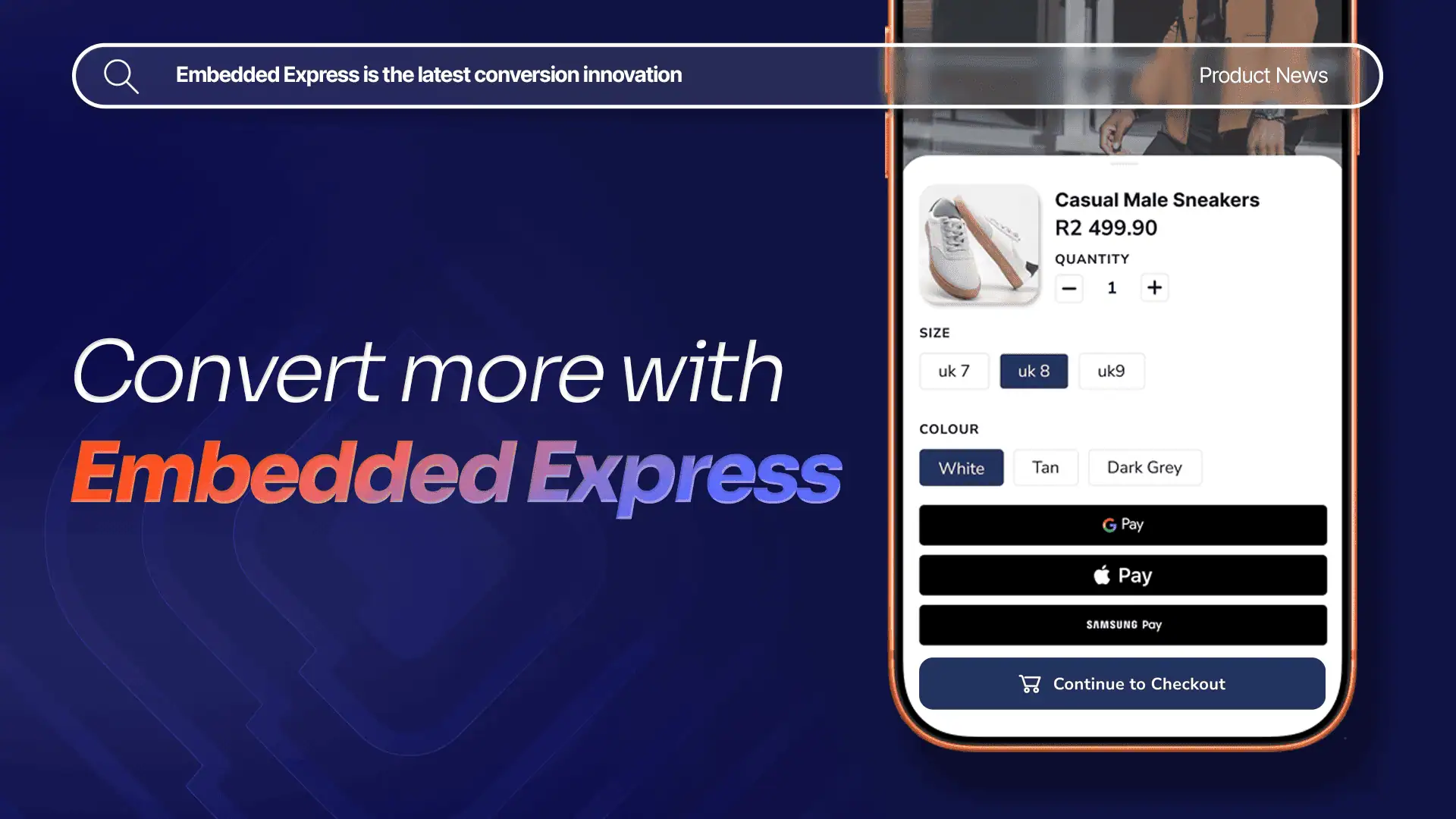
Giving your customers the ultimate checkout shortcut with Embedded Express

PayJustNow on Peach Payments’ POS device improves in-store payment experience
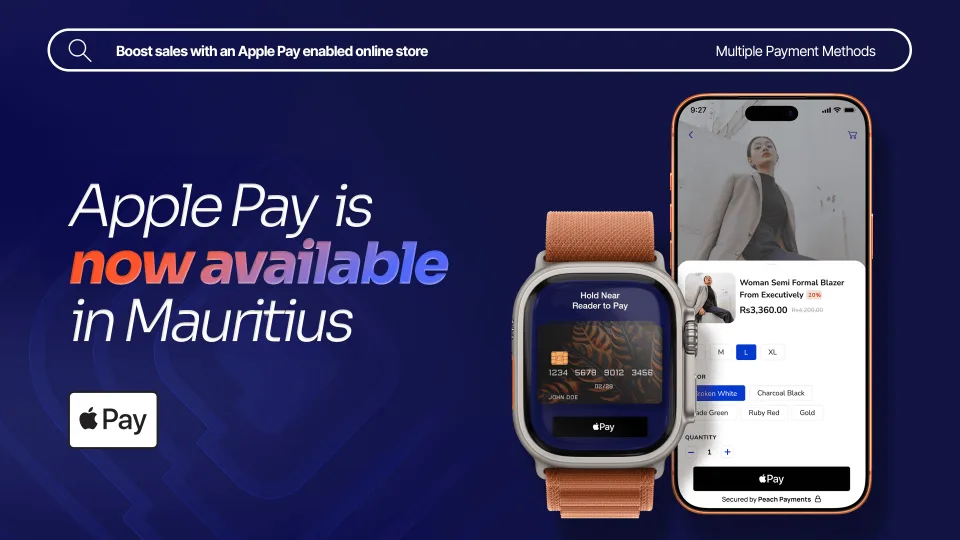
Peach Payments brings Apple Pay to merchants

From Check-in to Check-out

How Multiple Payment Options Improve Online Travel Sales
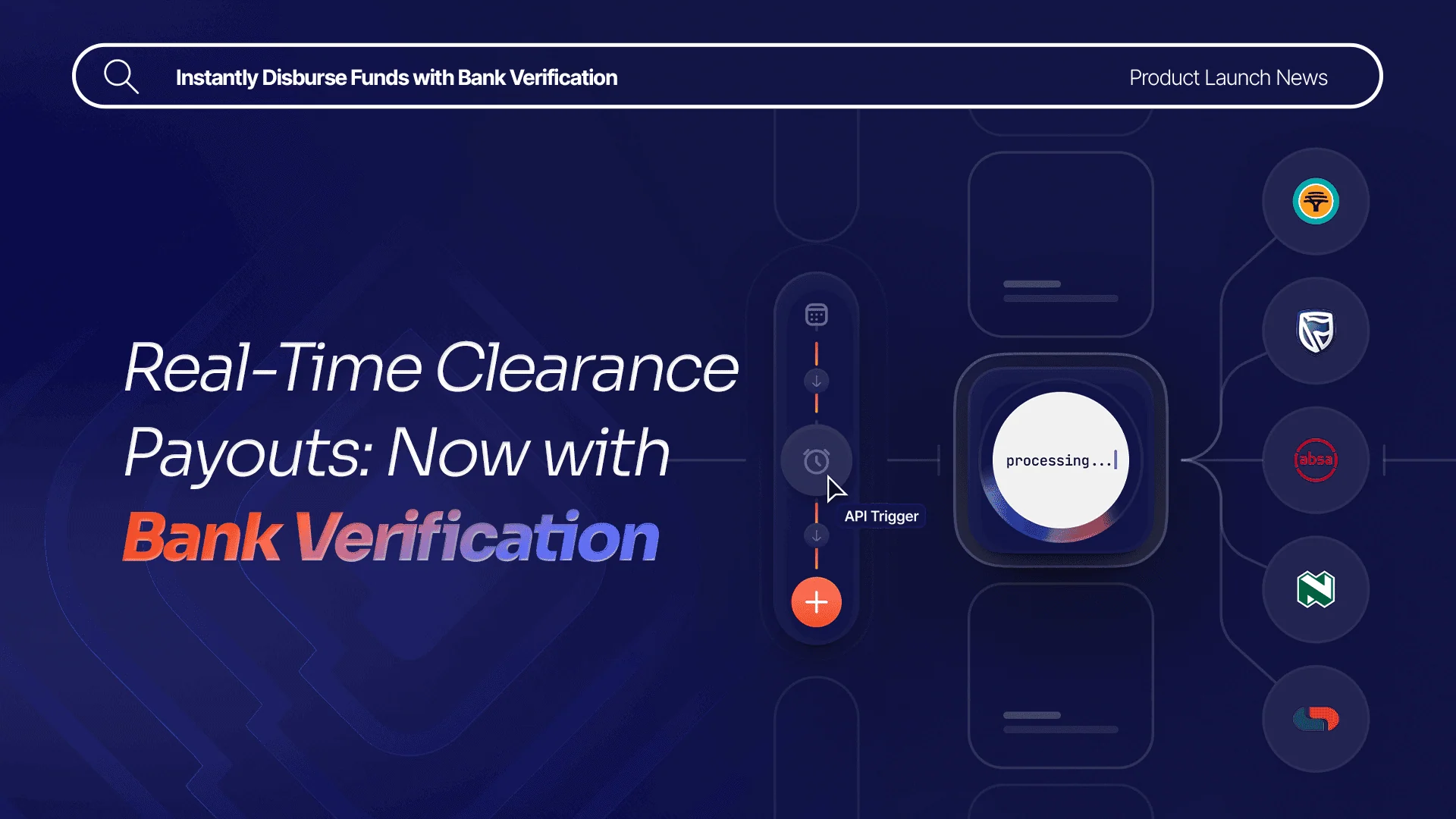
The New Standard for Payouts in South Africa
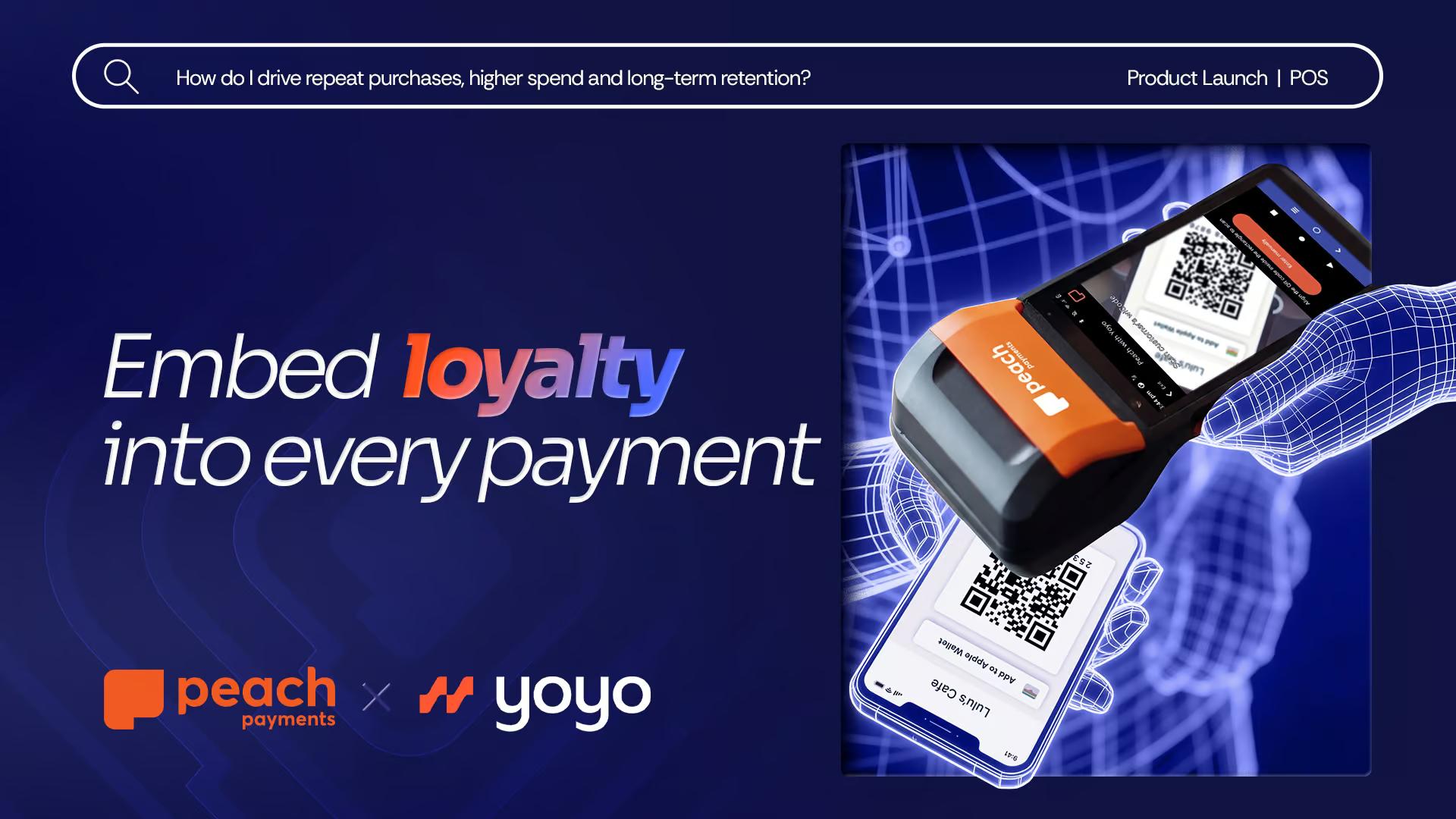
Peach Payments and Yoyo add bank card-linked loyalty to Digit Pro POS device
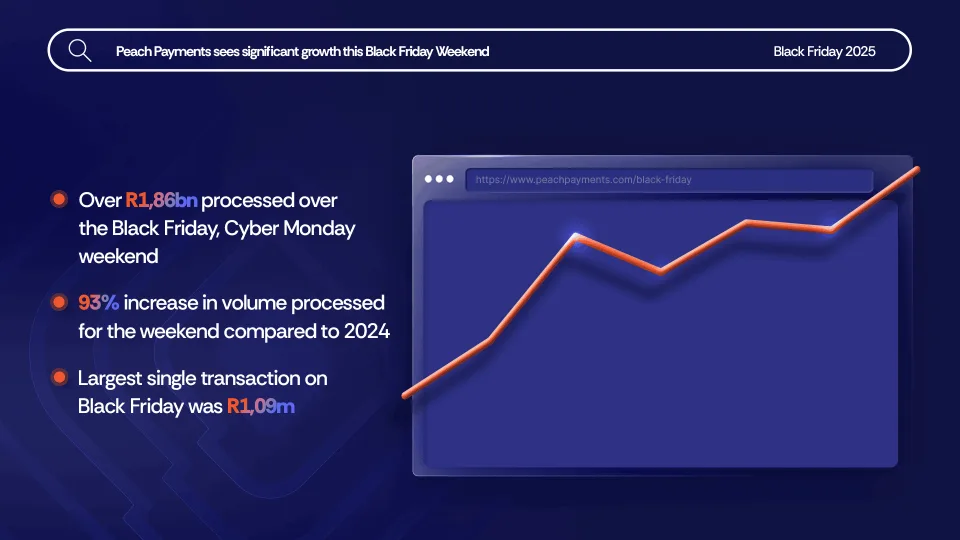
Black Friday up 93% over 2024, R1,86bn processed
Bringing Our New Peach Values to Life

Samsonite in-store payment methods
How global and regional companies can use the Mauritius IFC to centralise online payments and treasury functions

# PeachFriday Merchant Deals 2025
A merchant’s guide to chargebacks

Four Black Friday payment realities for merchants
What are Direct Merchant Accounts (ISO) versus Aggregation Accounts?
What Is 3RI? Everthing you need to know about Requestor-Initiated Authentication
Highlights from the 2025 World Wide Worx Online Retail Report
What is Interchange? Everything you need to know about interchange fees